Why Trend Judgment Fails Your Cash Flow — And What Actually Works
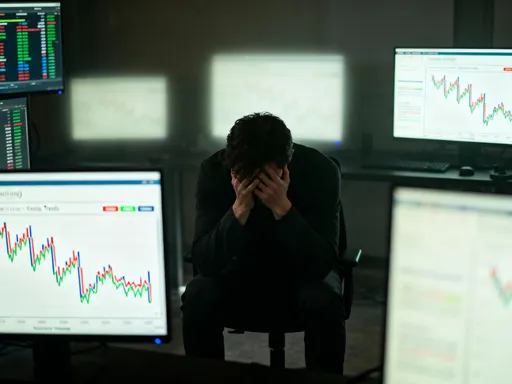
We’ve all been there—chasing a ‘hot’ market trend, only to watch our cash flow take a nosedive. I learned the hard way that mistaking noise for signal can drain your wallet fast. It’s not about predicting the future; it’s about managing reality. In this piece, we’ll unpack how flawed trend judgment becomes a silent killer of financial stability—and what smart, grounded strategies really keep money moving. No hype, just real insight. The emotional pull of trends is strong, especially when stories of sudden success dominate headlines. But behind those narratives often lies a less glamorous truth: timing the market rarely leads to lasting financial health. For many, particularly those managing household budgets or small enterprises, the real challenge isn’t growth—it’s consistency. And consistency is undermined every time we confuse a temporary shift with a permanent trend.
The Illusion of Predictability in Cash Flow Management
Many people operate under the belief that if they can just identify the right trend at the right time, their financial situation will improve. This mindset assumes a level of control and foresight that most individuals simply do not possess. In reality, cash flow management is less about prediction and more about reaction—timely, measured, and informed reaction. The illusion begins when people mistake volatility for opportunity. A sudden spike in income, a brief drop in expenses, or a short-term market surge can appear to signal a new direction. But acting on these signals without deeper analysis often leads to poor decisions. For example, a freelancer who experiences a month of unusually high earnings might decide to increase their monthly spending, assuming this new income level is sustainable. When the next month returns to normal, the gap between income and outflow creates stress, missed payments, or reliance on credit.
This kind of misjudgment is not limited to individuals. Small business owners frequently fall into the same trap. A café owner, for instance, may see a temporary increase in foot traffic due to a local event and interpret it as a sign of growing demand. They respond by hiring additional staff, leasing new equipment, or expanding the space—only to find that customer numbers revert to previous levels once the event ends. The result is higher fixed costs with no corresponding increase in revenue, putting pressure on cash reserves. These examples illustrate a fundamental truth: cash flow is not driven by isolated events, but by patterns over time. Recognizing the difference between a one-off occurrence and a true trend requires patience and discipline, qualities that are often overshadowed by the desire for quick results.
Moreover, the human brain is wired to detect patterns, even when none exist. This cognitive bias, known as apophenia, leads us to see meaning in random fluctuations. In financial terms, this means we may assign significance to minor changes in income or spending, interpreting them as the start of a new trend. The danger lies in the actions that follow—spending more, investing prematurely, or restructuring finances based on incomplete data. The consequences are rarely immediate, which makes the error harder to detect. By the time the mistake becomes clear, the financial damage is often already done. The solution is not to abandon observation, but to refine it—shifting from reactive interpretation to systematic tracking.
Why Trend Chasing Drains Your Liquidity
Chasing trends may feel like proactive financial management, but it often leads to the opposite: weakened liquidity and reduced financial flexibility. Liquidity—the ability to meet short-term obligations without disruption—is the backbone of financial health. When decisions are based on anticipated trends rather than actual cash flow, liquidity suffers. Consider the case of a working parent who decides to launch an online store after reading about the rise of e-commerce. Excited by stories of rapid success, they invest savings into inventory, website development, and marketing. But if demand does not materialize as expected, the cash tied up in unsold goods cannot be used for essential expenses like groceries, utilities, or childcare. The emotional high of starting something new gives way to financial strain, and the initial investment becomes a burden rather than an asset.
Similarly, families who refinance their mortgage in anticipation of rising interest rates may find themselves overextended if the expected rate hikes are delayed or reversed. While the intention is sound—to lock in lower rates before they rise—the timing is uncertain. If the refinance comes with high fees or a longer loan term, the long-term cost may outweigh the short-term benefit. The problem is not the decision itself, but the assumption that the trend will unfold as predicted. This kind of forward-looking planning, while common, ignores the reality that personal cash flow operates on a different timeline than macroeconomic shifts. Income is often irregular, expenses can change unexpectedly, and financial priorities evolve. Basing decisions on external trends without aligning them with personal financial rhythms increases the risk of imbalance.
Another common scenario involves scaling up household spending after a temporary income boost. A bonus, tax refund, or side gig windfall might tempt someone to upgrade their car, take an expensive vacation, or remodel a kitchen. These purchases are not inherently bad, but they become problematic when they are treated as permanent changes to lifestyle. Once the extra income disappears, the new expenses remain, creating a gap that must be filled—often with debt. This cycle is especially dangerous because it mimics progress. On the surface, life appears to be improving. But beneath the surface, financial resilience is eroding. The key is not to avoid spending increases altogether, but to ensure they are supported by sustained, not speculative, income.
The Hidden Cost of Misreading Market Signals
One of the most insidious aspects of trend judgment is its invisibility. The cost of misreading a signal does not appear on a balance sheet immediately. It accumulates over time in the form of missed opportunities, increased stress, and diminished options. A temporary sales spike, for example, might lead a small business owner to believe that a new product line is a winner. They respond by increasing production, ordering more materials, and allocating marketing resources. But if the spike was driven by a one-time promotion or seasonal fluctuation, the follow-up sales may not justify the investment. The inventory sits unsold, cash is tied up, and storage or spoilage costs add up. What looked like a breakthrough turns into a liability.
Freelancers are equally vulnerable. A sudden influx of high-paying clients might suggest that demand in their niche is growing. They may raise their rates, decline lower-paying work, or reduce their marketing efforts, assuming the pipeline will stay full. But when the wave of demand recedes, they are left with fewer clients and a higher income target to meet. The misstep was not in raising rates, but in assuming permanence where there was only transience. This kind of error is amplified by the natural human tendency to extrapolate from recent experience. We remember the last few months more vividly than the last few years, so a brief upswing feels more significant than it is.
The psychological pull of pattern recognition is powerful. From an evolutionary standpoint, spotting patterns helped our ancestors survive—recognizing animal tracks, seasonal changes, or social cues. But in modern finance, this same instinct can lead us astray. We see a few data points and assume a trend, ignoring the broader context. This is particularly dangerous in cash flow management, where stability depends on consistency, not peaks. The hidden cost is not just financial—it is also emotional. Repeated misjudgments erode confidence, making people either too cautious or too reckless in future decisions. The solution lies in developing a more disciplined approach to data interpretation, one that prioritizes long-term observation over short-term excitement.
What Works Instead: Staying Grounded in Real Data
The most effective cash flow strategies are not built on predictions, but on observation. Instead of trying to forecast the future, successful financial managers focus on understanding the present. This begins with consistent record-keeping—tracking every dollar that comes in and goes out, month after month. Over time, this data reveals true patterns: seasonal fluctuations, recurring expenses, and natural income cycles. These insights are far more reliable than speculative forecasts. For example, a household that reviews twelve months of bank statements will see that utility bills are higher in winter, grocery costs rise during school months, and income dips during vacation periods. Armed with this knowledge, they can plan ahead, setting aside funds during high-income months to cover anticipated shortfalls later.
One of the most powerful tools in this approach is the use of lagging indicators—metrics that reflect what has already happened, rather than what might happen. Average monthly balance, for instance, provides a clear picture of financial stability over time. Unlike a single month’s surplus, which could be an anomaly, the average smooths out fluctuations and reveals the underlying trend. Similarly, tracking the ratio of fixed to variable expenses helps identify areas of vulnerability. A high proportion of fixed costs means less flexibility when income drops. By focusing on these real, measurable factors, individuals can make decisions based on facts, not feelings.
This data-first mindset also reduces the influence of external noise. Market commentary, social media trends, and financial news often emphasize volatility, creating a sense of urgency. But for most households, the goal is not to capitalize on every shift, but to maintain stability. A consistent, long-term view allows for gradual adjustments rather than reactive overhauls. For example, instead of refinancing a mortgage based on a forecast, a family might wait until they have at least six months of stable income and a clear understanding of their long-term housing plans. This kind of patience may seem unexciting, but it is precisely what protects against costly mistakes. The foundation of sound cash flow management is not speed—it is accuracy and consistency.
Building Buffers, Not Bets: The Smarter Way to Manage Risk
Rather than betting on trends, the most resilient financial strategies focus on building buffers. An emergency fund, for example, is not a prediction—it is a preparation. It does not require knowing when a crisis will occur, only that one eventually might. The same principle applies to flexible budgeting. By keeping a portion of expenses variable—such as entertainment, dining, or discretionary shopping—households can adjust spending quickly when income changes. This adaptability is far more valuable than perfect foresight.
Case studies from small businesses illustrate this principle clearly. A local bookstore that survived the pandemic did not do so because it predicted the shift to online sales. Instead, it had maintained a modest cash reserve, negotiated flexible lease terms, and kept overhead low. When foot traffic dropped, the owner was able to pivot gradually—launching an online ordering system, offering curbside pickup, and adjusting staff hours—without facing immediate financial collapse. The key was not prediction, but preparedness. Similarly, a freelance graphic designer who experienced a 40% drop in clients during an economic downturn was able to weather the storm because she had built a three-month expense buffer into her financial plan. She used the time to update her portfolio, reach out to past clients, and explore new platforms—actions made possible by the breathing room her buffer provided.
These examples highlight a fundamental shift in mindset: from trying to control the future to building the capacity to respond to it. No amount of trend analysis can guarantee smooth cash flow in uncertain times. But a well-structured financial system—with reserves, flexible costs, and clear priorities—can absorb shocks and maintain momentum. This approach does not eliminate risk, but it reduces its impact. It allows individuals and families to make decisions from a position of strength, rather than desperation. And in the long run, that makes all the difference.
Practical Tools for Smarter Trend Interpretation
This is not to say that all trend analysis is useless. When used correctly, certain tools can enhance financial decision-making without creating dependency on prediction. One of the most effective is the rolling average—a calculation that smooths out short-term fluctuations by averaging data over a set period, such as three or six months. This helps distinguish between temporary spikes and sustained changes. For example, a rolling three-month average of income can reveal whether a freelancer’s recent earnings increase is part of a broader upward trend or just a brief anomaly.
Seasonality tracking is another valuable tool. Many businesses and households experience predictable variations in cash flow throughout the year. Retailers see higher sales during holidays, landscapers earn more in summer, and families face higher expenses at the start of the school year. By mapping these patterns over multiple years, individuals can anticipate them and plan accordingly. This is not about reacting to trends as they happen, but about preparing for them in advance. A family that knows their property tax bill arrives every November can begin saving in January, spreading the cost over twelve months instead of facing a sudden burden.
Cash flow forecasting models, when grounded in historical data, can also be useful. Unlike speculative projections, these models use past inflows and outflows to estimate future scenarios under different conditions. For example, a household might create a forecast that shows how a 10% reduction in income would affect their ability to meet obligations. This kind of planning is not about predicting a layoff, but about understanding vulnerabilities and identifying solutions in advance. The key is to use these tools as guardrails, not as steering wheels. They should inform decisions, not dictate them. When trend interpretation is rooted in real data and used with humility, it becomes a support system rather than a source of risk.
Conclusion: Mastering Cash Flow Without the Crystal Ball
The goal of financial management is not to predict the future with perfect accuracy, but to build a system that works regardless of what the future holds. Trend judgment, while tempting, often leads to overconfidence, misallocation of resources, and weakened liquidity. The real path to financial stability lies in disciplined observation, consistent record-keeping, and the creation of resilient structures. By focusing on actual data rather than speculative signals, individuals can make informed decisions that support long-term well-being. Building emergency reserves, maintaining flexible budgets, and using tools like rolling averages and seasonality tracking empower people to adapt, rather than react.
In the end, the strongest cash flow strategy is not the most complex or the most aggressive—it is the one that keeps moving, even when conditions change. It is the approach that prioritizes preparation over prediction, consistency over speed, and resilience over risk. For the 30- to 55-year-old managing a household, balancing work, family, and financial responsibilities, this kind of stability is not just valuable—it is essential. The world will continue to generate noise, and trends will come and go. But those who anchor their decisions in reality, not illusion, will find that their finances can withstand the turbulence and continue to grow. True financial mastery is not about seeing the future—it is about managing the present with clarity, courage, and care.