Listened to 300 Hours of Podcasts Last Year: Here’s How It Helped Me Remember My Life Better
Have you ever felt like your days blur together, leaving little trace of what really mattered? I used to lose moments without even realizing it—until I started listening to podcasts differently. Not just for entertainment, but as a way to capture my thoughts, routines, and personal growth. Over time, this simple habit became a quiet yet powerful tool for organizing my life and preserving memories I didn’t want to forget. It wasn’t about chasing productivity or downloading the latest app. It was about finding a gentle, human way to stay connected to myself—and to the people I love—through something I already enjoyed every day.
The Day Everything Felt the Same
It wasn’t a crisis. Nothing was broken. But one evening, as I stood in my kitchen washing dishes, I realized I couldn’t remember a single meaningful moment from the past month. Not a conversation, not a feeling, not even a small win. My days had settled into a rhythm so smooth it had become invisible. I was doing everything right—keeping up with the laundry, packing lunches, showing up for work, checking in on my mom—but I felt like I was moving through life on autopilot. The kind of autopilot that erases itself as soon as it passes.
That moment hit me harder than it should have. I wasn’t sad or overwhelmed. I was just… absent. And that scared me more than stress ever did. Because when we don’t remember our lives, it’s like we didn’t live them at all. I started wondering: How many moments had already slipped away? The quiet morning when the sunlight hit the floor just right. The laugh my daughter let out during breakfast that made me pause and smile. The thought I had while folding laundry—something about being kinder to myself—that vanished before I could hold onto it.
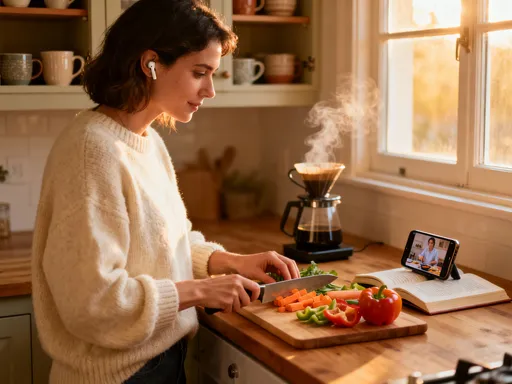
I wanted to feel present again. Not in a performative way, not by taking more photos or posting stories, but in a real, internal way. I wanted to remember how I felt, not just what I did. And I didn’t want to add another chore to my list—no bullet journaling, no daily gratitude logs, no complicated systems. I needed something simple, something that fit into the life I was already living. That’s when I looked at my phone and saw my podcast app. I’d been listening for years—mostly true crime while folding laundry, parenting tips during school drop-offs, or storytelling podcasts on weekend walks. It was background noise, sure, but it was also time I was already giving to myself. What if I could use that time differently?
From Background Noise to Personal Companion
At first, podcasts were just something to fill the silence. I’d press play while unloading the dishwasher or driving to the grocery store, grateful for the distraction. But I started to notice something: the episodes I remembered weren’t the ones with the most shocking twists or the funniest jokes. They were the ones that made me pause. The ones where a host said something that echoed in my chest. Like the time a woman talked about letting go of perfectionism in motherhood, and I had to pull over because I suddenly had tears in my eyes. Or when a therapist explained how small routines build emotional resilience, and I thought, Oh. That’s why I feel better on days I make my bed.
That’s when it clicked: podcasts weren’t just stories. They were mirrors. And if I was already spending hours listening, why not use that time to reflect on my own story? I didn’t change my routine—same walks, same chores, same commutes—but I started being more intentional about what I played. Instead of scrolling blindly, I picked episodes that invited thoughtfulness. A conversation about patience. A story about rebuilding after loss. A simple reflection on joy in ordinary moments. I began treating my listening time like a quiet appointment with myself.
And slowly, something shifted. I stopped just absorbing words and started feeling them. I’d hear a line and think, That’s exactly how I’ve been feeling. Or, I should try that. Or even, I wonder if my sister needs to hear this. Podcasts became less like entertainment and more like companionship. Not with the hosts, exactly, but with the version of myself that was listening. The one who noticed things. The one who cared. The one who was still growing, even if no one else could see it.
Building a Memory System Without Trying
I’ve never been good at journaling. I’ve tried—beautiful notebooks, fancy pens, even guided prompts—but I always quit within a week. It felt like homework. And apps? Too many notifications, too much pressure to “capture the moment.” I didn’t want another system to manage. I just wanted to remember.
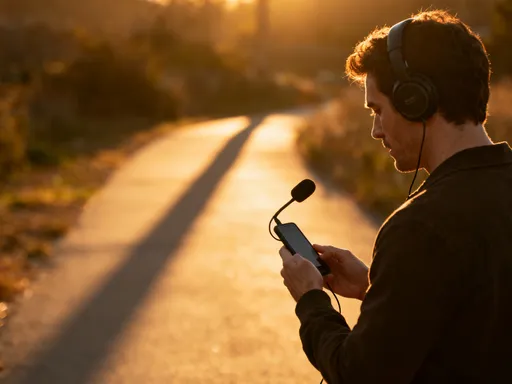
So I tried something tiny: after certain episodes, I’d open my voice memo app and record just two or three minutes. Not a full reflection. Just a snippet. “That episode about letting go of guilt really hit me. I’ve been hard on myself about the messy house. Maybe it’s okay.” Or, “I heard this story about a woman who started walking every morning. I did that today, and it helped.” No editing. No pressure. Just me, talking to myself, right after a moment of clarity.
At first, I didn’t think much of it. But after a few weeks, I went back and listened to an old memo. And something amazing happened: I didn’t just hear my voice. I felt that day. The tiredness in my tone reminded me I’d been up late with a sick kid. The pause before I spoke showed I was really thinking. And the softness in my voice when I said, “Maybe I’m doing better than I think,” made me cry a little. These weren’t just recordings. They were emotional snapshots.
Then I tried pairing them with the podcast episode I’d just heard. I’d play the closing minutes of the show, then my voice memo. And suddenly, I was back. Not just in the moment, but in the mood. The music, the host’s tone, my own words—it all came together like a time capsule. I realized I’d accidentally built a memory system. No passwords. No calendars. Just audio. And it worked because it didn’t feel like work. It felt like talking to a friend who already knew me.
Organizing Life Through Audio Cues
Science tells us that sound is one of the most powerful triggers for memory. A song can take you back to high school. A smell can bring your grandmother’s kitchen to life. But I didn’t realize how deeply podcasts could anchor my own story until I started noticing the connections.
There’s a particular podcast I love—one with a soft piano intro and a host who speaks slowly, like she’s giving you time to think. I remember listening to an episode about setting boundaries while I was sitting in my car, waiting for my son’s soccer practice to end. I’d been avoiding a hard conversation with a friend, and that episode gave me the courage to finally say what I needed to. Months later, when I heard that piano intro again, I didn’t just remember the episode. I remembered the cold air outside, the way my hands gripped the steering wheel, the relief I felt after sending that text. The audio cue brought back the whole emotional landscape.
I started paying attention to these moments. A upbeat theme song reminded me of the week I decided to start therapy. A quiet storytelling podcast played during the afternoon I finally said no to an extra committee at school. I began to see my playlist not as random episodes, but as a timeline of my inner life. I didn’t need dates or notes. I could scroll through my listening history and feel my way through the year. That one was when I was healing. That one was when I felt proud. That one was when I needed comfort.
It changed how I organized my life. Instead of relying on calendars or to-do lists, I started using audio as my guide. If I wanted to feel motivated, I’d replay an episode that sparked action. If I needed calm, I’d go back to one that soothed me. My podcast app became a personal archive—not of facts, but of feelings. And in a world that often asks us to move faster and do more, that kind of organization felt like a gift.
Turning Moments into Meaning
One rainy Sunday, I decided to go back and listen to a few of my old voice memos. I expected to cringe. To hear myself sounding unsure or overly emotional. But instead, I felt something like pride. Because I could hear the change. In one memo from January, I said, “I don’t know if I can handle this year.” By March, I was saying, “I’m learning to ask for help.” By June, “I think I’m becoming someone I like.”
It wasn’t just about remembering. It was about understanding. I started to see patterns—how I responded to stress, what kinds of stories inspired me, when I tended to shut down or push forward. I noticed that I always felt stronger after listening to women who talked about resilience. That I processed grief better when I could hear someone else name it. That small shifts in mindset often came after episodes about self-compassion.
This wasn’t data tracking. It wasn’t about optimizing my life. It was about becoming more aware of who I was—and who I was becoming. The podcast app, once just a source of entertainment, had become a mirror. And in that mirror, I saw not just my reflection, but my growth. I wasn’t just consuming content. I was engaging with it. I was letting it shape me, gently, over time. And that made all the difference.
Sharing What Matters, Without the Pressure
One of the most unexpected gifts of this habit has been connection. I’ve never been great at saying, “Hey, let’s have a deep talk.” It feels forced. But sharing a podcast clip? That feels natural. I once sent my sister a short segment from an episode about sisterhood, with a note: “This reminded me of us.” She called me that night, and we talked for over an hour—about childhood, about our parents, about how we’d always had each other’s backs. It wasn’t because of the podcast. It was because the podcast gave us a door to walk through.
I’ve done the same with my mom, sending her an episode about aging with grace. With my best friend, sharing a story about friendship after kids. Even with my daughter, playing her a short piece about courage before her first solo school play. These weren’t grand gestures. Just small moments where technology helped me say something I’d been too busy or too shy to say out loud.
And it worked both ways. When my cousin sent me a clip from a storytelling podcast and said, “This made me think of your garden,” I felt seen. It wasn’t just about the words. It was about the fact that she was thinking of me, in a quiet, thoughtful way. These tiny exchanges became a new kind of emotional currency—light, low-pressure, but deeply meaningful. They didn’t replace real conversations. They made them possible.
A Smarter, Softer Way to Live
I’m not tracking my listening hours anymore. I don’t have a spreadsheet or a goal of 500 episodes. I just listen. And when something moves me, I record a few words. That’s it. No rules. No pressure. No guilt when I miss a day.
But what I’ve gained is more than memory. It’s presence. It’s clarity. It’s a way of living that feels more intentional, even when life is chaotic. I don’t need to remember every detail of every day. But I want to remember how I grew. How I felt. Who I was in the quiet moments no one saw.
This habit didn’t change my life in a dramatic way. I didn’t quit my job or move to a new city. But it helped me appreciate the life I already have. It reminded me that growth doesn’t always come in big leaps. Sometimes, it’s in the way you pause during a podcast and think, That’s true for me too. Sometimes, it’s in the voice memo you save after a hard day, just to say, I made it.
Technology often feels like it’s pulling us away from ourselves. But it doesn’t have to. When used with care, it can help us return to who we are. It can hold our thoughts when we’re too tired to write them down. It can play back our voice when we’ve forgotten how strong we sounded. It can connect us—not just to information, but to meaning.
So if you’ve ever felt like your days are slipping by, I’ll say this: try listening differently. Let a podcast be more than background noise. Let it be a companion. A mirror. A quiet place to remember who you are. You don’t need a new app or a perfect system. You just need to press play—and give yourself permission to be heard.