Tired of Music Being Just a Solo Thing? How Streaming Helped Me Connect With New Friends
You know that moment when your favorite song comes on, and you wish someone else was there to feel it with you? I used to think music was just a personal escape—until I realized how much it could actually bring people together. What started as a solo habit became a bridge to new friendships, shared moments, and real connections. It wasn’t about the playlist; it was about the people. In this article, I’ll show you how small, intentional tweaks to how you use music streaming can quietly expand your social world—without feeling forced or awkward. And the best part? You don’t have to change who you are. You just need to let the music do a little more than keep you company.
The Lonely Playlist: When Music Feels Like a Wall Instead of a Window
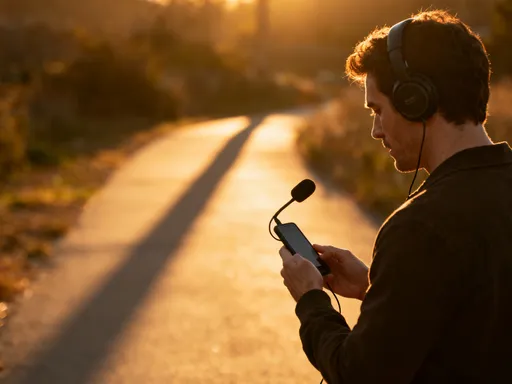
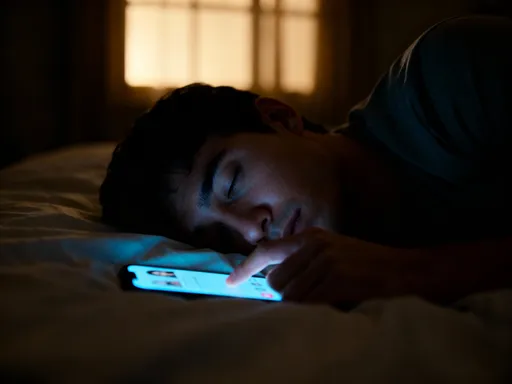
For years, my headphones were like a security blanket. On my commute, I’d press play on my ‘Morning Focus’ playlist—soft piano, gentle vocals, nothing too loud. At the gym, it was high-energy pop to keep me moving. And late at night, when the house was quiet and my thoughts were racing, I’d slip into my ‘Calm Down’ mix, letting slow melodies carry me into sleep. Each playlist had a purpose, and each one felt like a personal ritual. I thought I was taking care of myself. But looking back, I realize something: I was also building a wall.
Music had become my safe space, yes—but it was also my invisible shield. When I wore my earbuds, I wasn’t just listening. I was signaling: Don’t talk to me. I’m occupied. I’m in my own world. And that was fine—most of the time. But slowly, I started to notice how isolated I felt. I’d go days without real conversation. My coworkers would chat about weekend plans, and I’d smile and nod, but I had nothing to share. I wasn’t lonely in the dramatic sense—no tears on the couch—but there was a quiet emptiness, like I was watching life through a window instead of living it.
One rainy Tuesday, I was standing at the coffee shop counter when the barista said, ‘This song always makes me want to dance in the rain.’ It was a classic 80s hit—something I knew instantly. I smiled and said, ‘Me too!’ And just like that, we were talking—about the artist, about our favorite throwback tracks, about how music from that era just hits differently. It was a two-minute conversation, but it left me feeling… lighter. Seen. And it made me wonder: How many tiny moments like this have I missed because I was too busy escaping into my own soundtrack?
That’s when I realized music didn’t have to be a retreat. It could be a doorway. But only if I was willing to step out from behind the headphones once in a while.
From Headphones to Hand-Raisers: Seeing Music as a Social Tool
The first real shift happened when I started paying attention—not just to the music, but to how other people responded to it. I began noticing things I’d never seen before: the woman on the train who mouthed the lyrics to a ballad, her eyes closed like she was in her own concert. The dad at the park who danced with his toddler to a pop song blasting from his phone. The cashier at the grocery store who tapped her fingers on the counter in perfect rhythm, completely unaware.
These weren’t just random moments. They were tiny invitations. And I started to see them for what they were: shared experiences waiting to happen. Music, I realized, is one of the few things that cuts across age, background, and lifestyle. It’s a universal language—one that doesn’t need translation. You don’t have to explain why a certain melody gives you chills. You just feel it. And when someone else feels it too, something clicks.
I started experimenting. Instead of putting both earbuds in, I’d leave one out—just enough to hear the world around me. And when I recognized a song playing in a café or store, I’d let myself react. A smile. A nod. A quiet ‘I love this one.’ And more often than not, someone would notice. ‘Right?’ they’d say. Or, ‘This takes me back.’ And just like that, a conversation began.
One afternoon at a bookstore, a soulful jazz track came on. I couldn’t help but sway a little as I flipped through a cookbook. The woman next to me laughed softly and said, ‘You’re the only one dancing.’ I laughed too and said, ‘It’s impossible not to!’ That turned into a 15-minute chat about music, travel, and our favorite comfort foods. We exchanged numbers. We’ve had coffee twice since. All because I didn’t block out the world that day.
It wasn’t about becoming an extrovert. It was about becoming present. And music—something I already loved—became my bridge back to people.
Shared Playlists That Actually Connect: Beyond Just Sending Songs
We’ve all done it: sent a song to a friend with a note like, ‘This made me think of you.’ And it’s sweet. But how often does it lead to a real conversation? Honestly, not that often. The song plays, they reply with a heart emoji, and that’s it. The moment passes. But what if we treated playlists not as gifts, but as conversations?
That’s what changed for me when I started co-creating playlists with people. Not just sending songs, but building them together. My friend Lisa and I were planning a weekend road trip. Instead of me making the whole playlist, I suggested we each add five songs. ‘No rules,’ I said. ‘Just songs that feel right for the drive.’ She added a nostalgic country track that reminded her of childhood summers. I put in a dreamy indie song that always makes me feel free. By the time we hit the road, we weren’t just listening to music—we were sharing stories. ‘Why this song?’ ‘What does it mean to you?’ It turned a simple drive into something deeper.
Then I tried it with my coworkers. We were organizing a small office celebration, and instead of me picking all the music, I made a shared playlist and invited everyone to add one song. One colleague added a high-energy dance track from her homeland. Another chose a classic rock anthem he said ‘saved his college years.’ When the party started and we heard each other’s picks, the room lit up. People were dancing, laughing, asking, ‘Who added this? Tell us the story!’ It wasn’t just background music anymore. It was a window into each other’s lives.
There’s something powerful about giving someone space in your musical world. It says, ‘I want to know what moves you.’ And when you listen to their song with curiosity instead of judgment, you’re saying, ‘I see you.’ That’s how playlists become more than lists of songs—they become acts of connection.
Using Streaming Features to Spark Real Conversations
Here’s something most of us don’t think about: our music apps know more about our social lives than we realize. Most streaming platforms—whether it’s Spotify, Apple Music, or others—have social features built in. You can see what friends are listening to, share songs with a tap, or even react to what someone’s playing in real time. But so many of us ignore these tools, worried they’ll feel awkward or intrusive. I get it. The last thing we want is to come across as ‘that person’ who’s always commenting on someone’s music taste.
But what if we used these features gently? With care? With curiosity? That’s what I started doing. Instead of scrolling past a friend’s shared song, I’d pause and think, Why this track? What’s behind it? Then I’d send a simple message: ‘Heard you were listening to this yesterday—what brought it on? It takes me back to my college days.’ Or, ‘I saw you added this to your playlist. I love that artist! What’s your favorite album?’
These weren’t deep dives at first. Just light touches. But they opened doors. One friend told me she’d been listening to a particular song because it reminded her of her mom, who’d passed away a few years ago. Another admitted he’d been replaying an old favorite because he was nervous about a big presentation. In both cases, the song was a doorway to something real—a memory, a feeling, a moment of vulnerability.
The key was asking with warmth, not interrogation. It wasn’t ‘Why are you listening to this?’ It was ‘This song means something to me—did it mean something to you?’ That small shift in tone made all the difference. And the beautiful part? These weren’t forced conversations. They felt natural, because the music did the heavy lifting. I was just following the emotion it had already sparked.
Over time, these little exchanges became a quiet rhythm in my relationships. A song shared. A memory offered. A connection deepened. All because I paid attention to what was already there—music we both loved, just waiting to be talked about.
Hosting Low-Pressure Music Nights That Bring People In
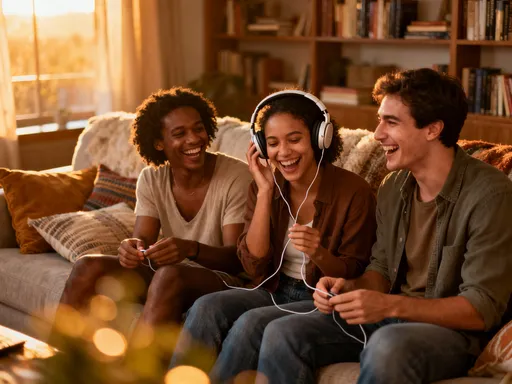
I’ll admit it: the idea of hosting a party used to make me anxious. Who to invite? What to serve? What if no one comes? What if it’s awkward? But then I realized I didn’t need a big event. I just needed a reason to gather. So I started small. I invited three friends over for what I called a ‘Listening Lounge’ night—no agenda, no pressure. Just good music, cozy blankets, and snacks.
I created a themed playlist: ‘Songs From Our Childhood.’ Nothing fancy. Just tracks from the 90s and early 2000s—boy bands, pop princesses, one-hit wonders. When my friends arrived, I hit play, and within minutes, we were singing along, laughing at how we used to dance in our bedrooms, sharing stories about first crushes and school dances. It wasn’t a party. It was a memory lane.
The next month, I tried a different theme: ‘Guilty Pleasures.’ This time, I encouraged everyone to bring one song they secretly loved but would never admit to in public. One friend played a cheesy love ballad from a reality TV show. Another shared a cartoon theme song she still knew by heart. We laughed, we cringed, we connected. Because in those silly, unguarded moments, we weren’t just listening to music—we were being ourselves.
What surprised me most was how these nights started to grow. Friends brought friends. A neighbor who heard music through the wall knocked and asked if she could join. We didn’t plan it, but slowly, a little community formed. Not because I was a great host, but because music gave us something safe to share. There was no small talk. No forced networking. Just songs that made us feel something—and the space to talk about it.
You don’t need a big house or fancy equipment. Just a speaker, a playlist, and the courage to say, ‘Come over. Let’s listen.’ The music will do the rest.
Finding Your Tribe Through Artist Communities and Events
One of the coolest things I’ve discovered is that music doesn’t stop when the song ends. Thanks to streaming platforms, I’ve found ways to stay connected to the artists I love—and to the people who love them too. Most apps now have artist pages that go beyond just songs. You can see tour dates, watch live streams, read updates, and even join fan communities.
I started exploring these features for my favorite singer—a folk artist whose lyrics feel like honest conversations. On her artist page, I saw she was doing a virtual concert. On a whim, I signed up. What I didn’t expect was the chat box. Hundreds of fans, from all over the world, sharing their favorite lyrics, telling stories about how her music got them through tough times. I typed in a comment about one song that helped me after my divorce. Within minutes, someone replied, ‘Me too. It felt like she was singing just to me.’
That night, I didn’t just watch a concert. I felt part of something. And it didn’t end when the music stopped. A few of us stayed in the chat, exchanging emails. One woman lived just 20 minutes from me. We met for coffee. Now we go to concerts together.
Then I started checking local events. Streaming apps often highlight nearby shows—small gigs, acoustic nights, open mics. I went to one at a cozy bookstore café. It was low-key, intimate. Halfway through, the performer played a song I knew well. I didn’t mean to, but I sang along—quietly, under my breath. After the set, someone tapped my shoulder. ‘You knew every word,’ she said. ‘Are you a fan too?’ That turned into dinner, then a weekly text exchange, then a real friendship.
These aren’t grand gestures. They’re small steps—clicking a link, buying a ticket, showing up. But they add up. And the best part? You don’t have to be the life of the party. You just have to show up as yourself, with your love for music leading the way.
Making Music a Habit of Connection, Not Just Escape
Looking back, I realize I didn’t need to change my love for music. I just needed to let it do more. Instead of using it only to retreat, I began using it to reach out. And the changes weren’t dramatic. No overnight transformations. Just small, consistent choices that slowly rewired my habits—and my heart.
Now, I share a song almost every day—not just because I love it, but because I wonder, Who else feels this way? I take off one earbud when I’m out, leaving space for the world to surprise me. I say ‘I love this song’ a little louder, a little more openly. I host listening nights. I click on virtual concerts. I ask, ‘What are you listening to?’ not as small talk, but as an invitation.
And something beautiful has happened: my world has grown. Not because I forced it, but because I let music guide me. I’ve made friends I never would have met. I’ve shared stories I didn’t know I needed to tell. I’ve laughed, cried, danced, and remembered—out loud, with others.
This isn’t about becoming someone you’re not. You don’t have to host big events or become a social butterfly. You just have to remember that music was never meant to be a solo act. It’s a duet. A chorus. A community.
So the next time your favorite song comes on, don’t just press play. Press pause. Look around. Who’s nearby? Who might feel it too? Because that moment—you two, sharing a song, sharing a feeling—might be the start of something real. And isn’t that what we all want? To be seen. To be heard. To belong.
Let the music lead you there. One song, one smile, one conversation at a time.