Tested 37 Return Apps in 6 Months: The One That Finally Made Shopping Stress-Free
Shopping should be joyful—but returns? Not so much. We’ve all been there: boxes piling up by the door, receipts lost, return deadlines slipping past like sand through fingers. I remember standing in my guest room, surrounded by unopened packages, feeling overwhelmed not by what I’d bought, but by what I hadn’t returned. The guilt, the clutter, the mental weight—it wasn’t supposed to feel this way. I love finding the perfect blouse or a cozy sweater for my daughter, but the aftermath? That part stole the joy. So I asked myself: what if technology could turn this headache into a quiet victory? Not with flashy promises, but with real help—something that actually fits into a busy woman’s life. I spent six months testing 37 different return apps, not for tech’s sake, but to reclaim time, reduce stress, and feel in control. What I found wasn’t just efficiency—it was peace of mind. Let me show you how one small app changed everything.
The Return Rut We’re All Stuck In
Picture this: it’s 9 p.m., the kids are finally asleep, and you’re scrolling through your email, trying to remember which dress you meant to send back. You bought it three weeks ago during a quick online break between school drop-offs and dinner prep. It looked great in the photos, but when it arrived, the color was off, the fabric too stiff. You never wore it. Now, the return window closes in two days. You sigh, knowing you’ll have to find the original box, print a label, and somehow squeeze a trip to the post office into tomorrow’s already packed schedule. Sound familiar? This isn’t just about one dress. It’s about the stack of shoes by the laundry room door, the unworn jeans still tagged, the kids’ clothes that didn’t fit right—all waiting for a moment you don’t have.
I used to think I was bad at returns. Like maybe I just needed more discipline or better organization. But after talking to friends, neighbors, even my sister across the country, I realized it wasn’t me. It was the system. We’re set up to fail. Buying is fast, fun, one-click easy. Returning? That’s where the speed bumps start. You have to dig up order numbers, track down policies, figure out who covers shipping, and hope you don’t miss a deadline. And if you do? That item becomes a tiny anchor, dragging down your mental space. It’s not just physical clutter—it’s emotional clutter too. The guilt of wasted money. The frustration of wasted time. The nagging sense that you’re falling behind, even when you’re doing your best.
For me, this hit a breaking point last winter. I had returned exactly zero items in three months, even though I knew I should’ve sent back at least eight. They were just… there. Taking up space in my closet, in my car, in my thoughts. I wasn’t lazy. I was overwhelmed. And I started wondering—why does something that should be simple feel so impossible? Was there really no better way?
Why Returns Feel Like a Trap
Here’s the truth no one talks about: the return process isn’t broken by accident. It’s designed this way. Not because companies hate us, but because every extra step you take—the printing, the labeling, the driving—increases the chance you’ll just give up and keep the item. And that means they keep your money. It’s not evil, but it’s not fair either. We’re caught in a maze with different rules for every store. One brand gives you 14 days, another 45. Some require a receipt, others don’t. Some let you drop off at a store, others only accept carrier pickups. And don’t even get me started on the apps. I downloaded so many—each one promising to simplify returns—and each one asking me to start from scratch. Upload this, log in there, connect that account. It felt like trying to follow five different recipes for the same cake, all at once.
And the worst part? The deadlines. They’re invisible until they’re not. You don’t get a reminder when your 30-day window is closing. You don’t get a nudge when the return label expires. You only find out when it’s too late. I missed a return once because the email got buried under a school newsletter and a grocery coupon. I didn’t realize until I went to print the label and got an error message. That $65 sweater? I never wore it, but I never got my money back either. It sat in my drawer like a tiny financial ghost.
I started to see how this wasn’t just inconvenient—it was exhausting. It took energy I didn’t have. Energy I wanted to spend on my family, on my hobbies, on just breathing. The more I thought about it, the more I realized this wasn’t about shopping. It was about respect. Respect for my time, my attention, my peace. I didn’t need another app that made returns slightly easier. I needed one that made them disappear.
Discovering the Hidden Helper
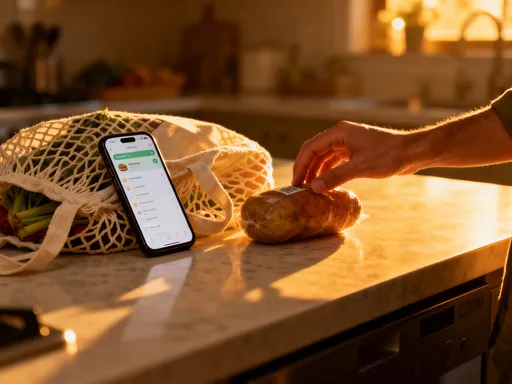
I found it by accident. My friend Lisa was visiting, and I mentioned my return pile. She laughed and said, “Oh, I used to have that problem too. But now I use this little app—it handles everything.” I rolled my eyes at first. Another app? Really? But she showed me her phone, and there it was: a clean, simple list of every order she’d made in the past six months, with little green checkmarks next to the ones she’d returned and soft yellow reminders on the ones coming due. “It even tells me where to drop it off,” she said, tapping the screen. “Like, ‘nearest drop box is two blocks away at the UPS Access Point.’ Isn’t that wild?”
I downloaded it that night. No hype, no pushy onboarding. Just a quick permission screen asking if it could look at my email and shopping accounts. I hesitated—privacy is important, and I wasn’t ready to hand over everything—but I figured, what’s the worst that could happen? I’d delete it tomorrow if it felt off. The next morning, I opened the app, and there it was: a list of 12 pending returns I hadn’t even remembered. One was from a store I hadn’t thought about in weeks. The return window closed in three days. The app had already pulled the label and suggested a drop-off location at the pharmacy near my gym. All I had to do was tap “Print” or “Share” if I wanted to send it to my husband.
I stood there, coffee in hand, feeling something I hadn’t in a long time: relief. Not excitement, not awe—just quiet relief. Like someone had lifted a backpack full of rocks off my shoulders. I didn’t have to remember anything. I didn’t have to search. The app had done the work for me. And in that moment, I realized this wasn’t just a tool. It was a helper. A quiet, consistent, thoughtful helper who actually showed up when I needed her.
How It Works Without Asking You To
The magic isn’t in what it does—it’s in how it does it. This app doesn’t shout. It doesn’t pop up with ads or ask for constant attention. Instead, it works like a personal assistant who reads your receipts, knows your habits, and acts before you remember. Once you give it permission to connect to your email and shopping accounts (it uses bank-level encryption, by the way—more on that later), it scans your inbox for order confirmations, shipping notices, and return policies. It learns which stores you shop at, how long their return windows are, and what kind of return options they offer.
Then, it starts organizing. Every purchase gets logged. Every return deadline gets tracked. And two days before that window closes, you get a gentle notification: “Your jacket from Evergreen Outfitters can be returned until Friday. Drop it off at the FedEx location on Main Street—it’s open until 7.” No stress. No digging. No panic. You can schedule a carrier pickup, print a label, or even let the app remind you to return it in-store. And if you decide to keep something? Just tap “Keep It,” and the reminder disappears.
I’ll never forget the first time I used it during a busy week. I was juggling a sick kid, a work deadline, and a birthday party for my niece. I hadn’t even thought about the pair of boots I’d ordered, but the app sent a soft chime: “Return deadline in 48 hours. Label ready.” I tapped “Share,” sent it to my husband, and he dropped it off on his way home. That small moment—that tiny act of being taken care of—meant more than I can say. It wasn’t about the boots. It was about not having to carry one more thing in my head.
More Than Just Returns: A Ripple of Calm
Here’s what surprised me most: the app didn’t just fix returns. It changed how I shop. Before, I’d buy three sizes of the same sweater, thinking, “I’ll just return what doesn’t fit.” Now, I take more time. I read reviews. I check the size chart. I think about whether I’ll really wear it. And guess what? I keep more things. I return less. Not because I’m more disciplined—but because I don’t feel the pressure to decide later. The safety net is gone, and oddly, that’s made me more confident.
But the real shift was emotional. I started feeling lighter. Less guilty. More in control. I wasn’t avoiding the guest room anymore. I wasn’t dreading my email inbox. And I noticed something else: I had more patience. With my kids, with my husband, with myself. It’s like that one small stressor was connected to a whole web of tension I didn’t know was there. When it disappeared, other things softened too. I made better decisions. I felt calmer in the mornings. I even started enjoying shopping again—not as an escape, but as a small pleasure.
My daughter noticed. “Mom, you seem happier,” she said one evening. “You’re not always on your phone trying to figure out returns.” I laughed, but it was true. The app didn’t just save me time. It gave me back mental space. And in a life that’s already full, that’s everything.
Teaching the Tech to Work for You
I know what you might be thinking: “But what about privacy? Isn’t it risky to let an app see my emails?” I asked myself the same thing. I wasn’t comfortable at first. I worried about data, about permissions, about things happening in the background I couldn’t see. So I took it slow. I connected one shopping account at a time. I read the privacy policy (yes, all of it). I learned that the app doesn’t store my passwords—it uses secure tokens, like a hotel key card that lets you in but can’t copy the master key. It doesn’t sell my data. It doesn’t even show ads. And I can turn off access anytime.
The first week, I kept checking it, making sure it wasn’t doing anything weird. But after a few days, I realized it wasn’t acting like a robot—it was acting like a thoughtful friend. It didn’t overstep. It didn’t nag. It just helped. And over time, I learned to trust it. Not blindly, but with the same cautious optimism I’d give a new neighbor who offered to water my plants while I was away.
If you’re thinking about trying something like this, my advice is simple: start small. Connect one account. See how it feels. Pay attention to your emotions as much as the features. Does it feel intrusive? Or does it feel like support? And remember, you’re in charge. You can pause it, delete it, adjust the settings anytime. This isn’t about handing over control. It’s about inviting a little help so you can focus on what matters most.
The Quiet Power of Small Fixes
We spend so much time chasing big solutions—major changes, dramatic transformations, life hacks that promise to fix everything. But what I’ve learned is that real change often comes in whispers, not shouts. It’s not the overhaul. It’s the small fix that removes one tiny friction point, again and again, until your whole life feels smoother. This app didn’t change my career or my marriage or my health. But it changed my daily rhythm. It gave me back mornings without guilt. It gave me evenings without last-minute printing. It gave me the quiet joy of a closet that’s actually organized.
And more than that, it reminded me that technology doesn’t have to be cold or complicated. It can be kind. It can be thoughtful. It can be the quiet hand that helps you carry the load, so you can walk a little lighter. I still shop online. I still make mistakes. But now, I don’t dread the aftermath. I don’t lose sleep over deadlines. I don’t feel like I’m failing at something that should be simple.
Real progress isn’t always loud. Sometimes, it’s the moment you realize you haven’t thought about returns in weeks. It’s the deep breath you take when you see a notification and know it’s not a problem—it’s a solution. It’s the peace that comes from knowing you’re not alone in the small struggles of daily life. That someone—or something—has your back. And for the first time in a long time, I do.