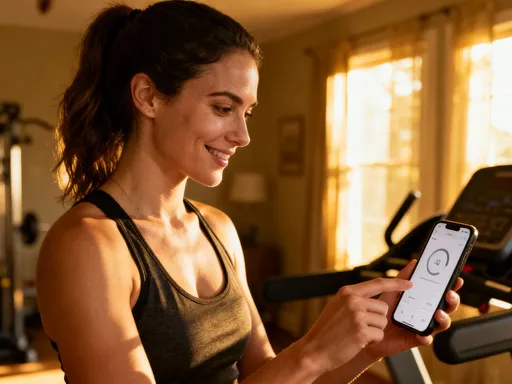
Overwhelmed by tracking workouts? This app made fitness simple and personal
Remember that awkward phase when just starting to work out—juggling timers, forgetting reps, and never knowing if you were actually making progress? I was lost too, until one unassuming app quietly transformed my routine. It didn’t demand perfection or push extreme goals. Instead, it met me where I was, turning confusion into clarity—one simple tap at a time. This is how technology can truly support real life. No flashy promises, no complicated charts. Just a tool that finally made fitness feel possible, even on the busiest, most exhausting days. And honestly? That small shift changed everything.
The Chaos Before Clarity: My Messy Fitness Start
When I first decided to get serious about fitness, I thought all I needed was willpower. I downloaded a notebook, wrote down “Day 1,” and confidently listed squats, lunges, and push-ups. But by Day 3, I was already losing track. How many reps had I done last time? Was I supposed to increase by two or five? Did I even complete all three sets? I’d stand in the middle of my living room, dumbbells in hand, completely blank. The excitement faded fast, replaced by frustration and a quiet voice whispering, “Maybe this just isn’t for me.”
I wasn’t lazy—I wanted to feel stronger, more energized, more in control of my body. But the process felt like homework, not healing. I’d scribble notes on napkins, take blurry photos of my workout list, and still end up doing the wrong number of reps. Progress? Invisible. Motivation? Gone by week two. I’d look at women online with perfect routines and wonder how they did it. Did they have more time? More discipline? Or did they just have something I didn’t?
That feeling of being behind before you even begin—it’s exhausting. And it’s one of the biggest reasons people give up on fitness, especially when life is already full. Between managing kids, work, meals, and everything else, adding one more complicated thing feels impossible. I wasn’t failing because I lacked commitment. I was failing because the tools weren’t built for real life. They were built for athletes, for data lovers, for people who enjoy spreadsheets more than sweat. And I? I just wanted to feel good in my jeans and have more energy to play with my kids.
Finding the Right Fit: Why Most Apps Felt Wrong
So I turned to technology, thinking, There’s got to be an app for this. I downloaded a few of the big names—ones with five-star reviews and sleek screenshots. But within minutes, I was overwhelmed. Dashboard after dashboard. Charts, graphs, calories burned, heart rate zones, weekly summaries, and even “performance scores.” I didn’t feel empowered—I felt judged. Like the app was side-eyeing me for only doing 10 squats instead of 15. One even gave me a sad emoji when I skipped a day. Really? I didn’t need guilt. I needed guidance.
And the setup? Oh, the setup. I had to input my weight, height, goals, activity level, sleep patterns, and preferred workout times. I spent 20 minutes just answering questions before I could even try a single exercise. By the time I got to the actual workout, I was already tired. It felt less like starting a fitness journey and more like filing my taxes. No wonder so many of us download these apps with good intentions and uninstall them within a week.
What I realized—and what I think so many of us miss—is that not all technology is created equal. Just because something is popular doesn’t mean it’s right for you. I didn’t need a digital drill sergeant. I needed a quiet companion—something that wouldn’t shout numbers at me but would gently say, “You’ve got this. Let’s keep it simple.” I wanted to feel supported, not scrutinized. I wanted to remember how many reps I did without having to think about it. I wanted to finish a workout and feel proud, not drained.
Then, one rainy afternoon, while scrolling through a wellness newsletter, I stumbled on a small mention of an app I’d never heard of. No flashy ads. No celebrity endorsements. Just a short paragraph describing it as “fitness tracking made human.” I clicked, downloaded, and opened it with zero expectations. And for the first time, I didn’t feel like I was being tested. I felt like I was being helped.
Simplicity That Sticks: How One Tap Changed Everything
The first thing I noticed was how clean it looked. No clutter. No neon buttons. Just a calm screen with today’s workout, clearly laid out. I tapped “Start,” and a soft voice said, “Alright, let’s begin.” No fanfare. No pressure. Just a simple cue to get moving. I did my first set of squats, and when I finished, I tapped the screen once. The app automatically logged the set, started the timer for rest, and whispered, “Great job. 30 seconds left.” I actually smiled. It felt… easy.
That one tap was revolutionary. No typing. No counting in my head. No pausing to write anything down. The app used voice input, so I could just say “12 reps” as I finished, and it recorded it. It remembered my last set and suggested the same number or a small increase if I was ready. The timer ran automatically between sets. And when I completed a workout, it didn’t bombard me with data. It just said, “You did it. See you tomorrow?” with a warm, encouraging tone.
I remember one evening, after a long day of work and school pickups, I almost skipped my routine. But I opened the app anyway, just to look. And there it was—my plan for the day, waiting patiently. I thought, Five minutes won’t fix anything. But I started anyway. Two sets of lunges. One set of planks. And when I tapped “Done,” the app said, “Proud of you for showing up.” I nearly cried. Not because it was a huge workout, but because someone—something—recognized the effort. It wasn’t about perfection. It was about showing up, again and again.
That’s when I realized the real power of good technology: it removes friction. It doesn’t add another task to your list. It makes the task already on your list easier. And when something feels easy, you’re more likely to do it. And when you do it consistently, real change begins.
From Tracking to Thriving: Building a Sustainable Routine
Within a few weeks, something shifted. I wasn’t just tracking workouts—I was seeing them. The app showed a simple calendar with green checkmarks for days I completed. No scores. No rankings. Just a visual reminder that I was showing up. And those little green dots? They became addictive in the best way. I didn’t want to break the chain. Not because I was chasing a prize, but because I could see my own effort adding up.
One morning, my sister called while I was sipping tea and reviewing my week. “Wait,” she said, “you’ve actually stuck with this for six weeks? No breaks?” I laughed. “I know, right? Even I can’t believe it.” She asked how I did it. I told her about the app—the one-tap logging, the gentle reminders, the way it never made me feel bad for doing less. “It’s not about doing more,” I said. “It’s about making it so easy that doing something feels better than doing nothing.”
And that’s the truth. The app didn’t turn me into a fitness influencer. But it turned me into someone who moves every day. Someone who feels stronger. Someone who no longer dreads workouts but looks forward to that quiet time for myself. The progress wasn’t dramatic—it was steady. I could do more reps. I held planks longer. I walked up stairs without getting winded. And more than that, I felt calmer, more centered, more like myself.
The biggest shift wasn’t physical—it was mental. I stopped seeing fitness as a punishment for eating cake or wearing jeans that felt tight. I started seeing it as a gift—to my body, to my mind, to my future self. And because the app made it sustainable, I didn’t burn out. I didn’t quit. I just kept going, one small win at a time.
Beyond the Workout: How Simplicity Improved My Daily Life
What surprised me most was how the app’s influence spilled into other parts of my life. Because I was logging workouts so easily, I started paying attention to other habits too. I noticed that on days I exercised, I slept better. So I began winding down earlier. I saw that I had more energy after drinking water in the morning, so I made it a rule: one glass before coffee. These weren’t drastic changes—just small tweaks, inspired by the clarity the app gave me.
One morning, I woke up and realized I wasn’t dreading the day. I was excited. Not because anything huge had changed, but because I had a plan. I opened the app, saw my workout for the day, and thought, I can do that. And I did. That sense of control—small as it seemed—rippled outward. I felt more confident at work. I was more patient with my kids. I even started saying “no” to things that drained me, because I finally felt like I had something worth protecting: my energy, my time, my peace.
It wasn’t magic. It was momentum. The app didn’t fix my life, but it gave me a foothold. It showed me that I could build a habit, stick to it, and feel good about it. And once I proved that to myself in one area, I started believing I could do it in others. I organized my pantry. I scheduled a dentist appointment I’d been putting off. I even started journaling again. All because I felt capable—because I had evidence, in the form of green checkmarks, that I could follow through.
That’s the quiet power of well-designed technology: it doesn’t shout. It supports. It doesn’t demand transformation. It makes small, consistent steps possible. And over time, those steps add up to something beautiful.
Sharing What Works: Helping Others Start Without Fear
When my cousin mentioned she wanted to start exercising but didn’t know where to begin, I didn’t hand her a list of workouts or a strict diet plan. I showed her the app. She was nervous at first—afraid she wouldn’t be “good” at it, worried about failing. I said, “You don’t have to be good. You just have to show up. Let the app do the rest.”
We sat together on her couch, and I walked her through the first setup. No long forms. No complicated goals. Just her name, her general fitness level, and what kind of workouts she liked—bodyweight, yoga, or light weights. Then we picked a five-minute routine to start. She did the exercises, and when she finished, she tapped the screen. The app said, “Welcome to your journey. You’ve got this.” She looked at me, eyes a little shiny, and said, “That… was actually okay.”
That moment stayed with me. Because it wasn’t about fitness. It was about permission. Permission to start small. Permission to be imperfect. Permission to try without fear of judgment. The app didn’t shame her for doing only five squats. It celebrated her for doing any. And that made all the difference.
Now, she texts me her green checkmarks like little victories. “Did my workout!” she’ll say. “Only 10 minutes, but I did it.” And I reply, “That’s everything.” Because it is. Starting is the hardest part. And once you’ve started, with kindness and support, you’re already winning.
Why Effortless Tools Matter: Technology That Truly Supports You
Looking back, I realize that the best technology isn’t the one with the most features or the flashiest design. It’s the one that disappears into your life—so seamless, so intuitive, that you forget it’s even there. It’s not about impressing you with what it can do. It’s about helping you do what you want to do, with less effort and more joy.
Too often, we think growth has to be hard. That if it’s easy, it’s not real. But what if the opposite is true? What if the tools that make change feel natural are the ones that last? This app didn’t transform me overnight. But it gave me consistency. It gave me clarity. It gave me confidence. And over time, those quiet, daily acts of showing up added up to a stronger, calmer, more joyful version of myself.
One evening, I scrolled through my progress—six months of workouts, hundreds of green checkmarks, dozens of small wins. I didn’t feel shocked. I didn’t feel like I’d achieved something impossible. I felt proud. Not because I had a perfect record, but because I had kept going, even on the messy days. Even when I was tired. Even when I didn’t feel like it.
That’s the kind of progress that sticks. Not the kind that comes from forcing yourself, but the kind that comes from being supported. And if you’re reading this, wondering if it’s too late to start, or if you’ll ever stick with it—let me tell you: it’s not. You don’t need more willpower. You don’t need a complete overhaul. You just need one tap. One small step. And a tool that believes in you, even when you don’t.