More Than Just Saying "Hey": How Voice Assistants Quietly Improved My Home Life
Living in a world buzzing with notifications, chores, and endless to-do lists, I used to feel like I was always one step behind. Then I started really using my smart speaker—not just for timers or weather checks, but as a quiet partner in daily life. It didn’t shout about its abilities; it simply showed up. From calming morning chaos to helping me stay connected with aging parents, the difference wasn’t in how often I used it—but how. Turns out, the real magic isn’t in the tech, but in the way it weaves into the moments that matter.
The Morning Rush That Used to Break Me
Mornings used to feel like a race I was losing before it even began. My daughter would misplace her school folder—for the third time this week. My son would argue over socks, as if the color somehow dictated his entire day. I’d spill coffee while scanning the calendar, trying to remember who needed rides, who had practice, and why I agreed to bring snacks for twenty kids on a Tuesday. My voice would rise, not because I wanted to yell, but because it felt like the only way to be heard over the noise. I was starting every day feeling frazzled, guilty, and defeated.
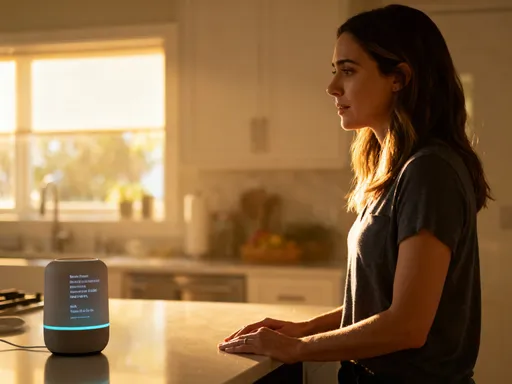
Then one Monday, I tried something different. Instead of scrambling, I stood in the kitchen and quietly said, “Hey, turn on the morning routine.” The lights warmed up gently, not harsh like before. The speaker began reading the day’s schedule in a calm voice: “School at 8:15. Soccer practice at 4:30. Don’t forget your violin lesson tomorrow.” No panic. No shouting. Just information, delivered with quiet clarity. My kids actually listened. My son even grabbed his backpack without being asked. It wasn’t magic—it was rhythm.
What changed wasn’t the device. It was how I used it. I stopped treating my voice assistant like a novelty and started weaving it into our natural flow. Now, every morning starts with a soft voice giving us what we need: the weather, the schedule, a reminder to pack lunch. I didn’t add more tech—I added intention. And suddenly, the chaos didn’t vanish, but it softened. The difference? I wasn’t reacting anymore. I was guiding. And that small shift—using voice not randomly, but rhythmically—made all the difference.
The Hidden Cost of "Convenient" Voice Commands
At first, I thought more voice commands meant better results. “What’s the weather?” “Play upbeat music.” “Set a timer for ten minutes.” “Tell me a joke.” I was asking for everything, all the time. My assistant felt like a game, a toy I couldn’t put down. But after a few weeks, something shifted. The responses started to blend into the background. I’d ask for the time and barely register the answer. The jokes fell flat. The music didn’t lift my mood. I realized I wasn’t using the assistant—I was just filling silence.
Turns out, convenience without purpose can backfire. When we overuse voice commands for trivial things, we risk what experts call “voice fatigue”—a kind of mental dulling where we stop paying attention, to both the device and our own needs. It’s like texting a friend too much about nothing. Eventually, the connection fades. I noticed I was asking more but getting less. The assistant wasn’t helping me—it was becoming part of the noise I was trying to escape.
The turning point came when I decided to be more intentional. I asked myself: What do I *really* need help with? The answer wasn’t jokes or random facts. It was remembering to call my mom. It was helping my daughter wind down at bedtime. So I changed my habits. I stopped asking for small things and started reserving voice for what mattered. Now, when I say, “Read a bedtime story,” it feels special again. When I set a medication reminder for my mom, it carries weight. I use the assistant less—but it means more. Less truly became more.
How Consistency Builds Trust—with a Machine
I’ll admit it: I never thought I’d feel *trusted* by a machine. But over time, something unexpected happened. I began to rely on my voice assistant not for flashy tricks, but for small, steady things—like turning off the lights when I forgot, or reminding me to lock the back door at night. These weren’t dramatic moments. They were quiet, consistent actions that added up.
At first, I’d double-check everything. Did it really turn off the stove? Did the garage door actually close? But after weeks of the assistant doing exactly what I asked, without fail, I stopped questioning. I started believing it. And that’s when the shift happened. It wasn’t just a gadget anymore. It became a quiet guardian—someone who had my back, even when I was distracted or tired.
This might sound strange, but trust isn’t only for people. It grows in any relationship where reliability meets repetition. Think about a neighbor who always waves, or a barista who remembers your order. Small, consistent actions build comfort. The same is true with technology. When I used my assistant regularly for simple, meaningful tasks, it stopped feeling cold or robotic. It felt dependable. And that dependability gave me something priceless: peace of mind. I wasn’t just being assisted—I was being supported. And that subtle difference made my home feel safer, calmer, and more in sync.
Bridging Distance with a Simple "Hey"
When my dad moved to another state, I worried we’d drift apart. Our phone calls became shorter, more formal. “How’s the weather?” “Good. Yours?” It wasn’t that we didn’t care—we just didn’t know how to connect without the rhythm of daily life. I missed the little things: seeing him water his garden, hearing him hum while fixing the sink. I wanted to stay close, but didn’t want to bother him with constant calls.
Then I discovered voice drop-ins. With permission, I could send a short message through our shared assistant—no ringing, no pressure. One morning, I said, “Hey, send a message to Dad: Your tulips are blooming. Thought you’d want to know.” Later, I got a voice reply: “Thanks, honey. Made me smile.” Another time, I sent, “Don’t forget your jacket—looks chilly today.” He responded, “Already wearing it. Good thing you’re looking out for me.”
These weren’t long conversations. They were tiny moments of care, passed through a speaker. But they kept us emotionally close. My dad, who once thought smart speakers were “gimmicks,” now uses one daily. He sends me updates about his walks, reminds me to drink water, and even plays my favorite songs when I’m stressed. The frequency isn’t overwhelming—it’s warm, rhythmic, like a heartbeat. Technology didn’t replace our bond. It made it easier to maintain, one gentle message at a time.
The Surprising Link Between Voice Use and Mental Clarity
I didn’t start using a voice assistant to reduce anxiety. I just wanted help with chores. But over time, I noticed something unexpected: I felt calmer. My mind wasn’t racing as much. I wasn’t lying in bed replaying the day, worried I’d forgotten something important. I realized that by offloading small mental tasks—“Add milk to the list,” “Remind me to call the dentist”—I was freeing up mental space. And that space made room for peace.
There’s real science behind this. Psychologists call it “cognitive load”—the amount of mental effort we’re using at any moment. When we’re constantly remembering appointments, shopping lists, and to-dos, our brains get overloaded. That overload can lead to stress, poor focus, and even mood swings. By using voice commands to capture those small tasks, I was giving my brain a break. I didn’t have to hold everything in my head anymore. The assistant became my external memory—quiet, reliable, always listening.
But I took it a step further. I started using voice not just for tasks, but for intention. Every morning, I ask, “What’s one thing I’m grateful for?” I speak it out loud, and the assistant records it. At night, I say, “Note to self: Today, I handled the school pickup chaos with patience.” These aren’t commands. They’re reflections. And because I say them aloud, they feel real. They ground me. Over time, these small, repeated moments became a form of gentle self-care. I wasn’t just managing my home—I was tending to my mind.
Teaching Kids Responsibility—Without the Nagging
Parenting teenagers can feel like a never-ending cycle of reminders. “Did you finish your homework?” “Don’t forget your cleats.” “When was the last time you cleaned your room?” I was tired of sounding like a broken record. My kids were tired of hearing me. We were both frustrated. I wanted them to be responsible, but I didn’t want to be the bad guy.
Then I introduced shared voice routines. I set up a family calendar linked to the assistant. Every morning, my son could say, “What’s on my list?” and hear his tasks: “Homework due tomorrow. Trash duty at 6 p.m. Don’t forget soccer practice.” No yelling. No arguments. Just a neutral voice delivering the facts. At first, I had to prompt him. But over time, he started asking on his own. The same with my daughter—she began checking her reminders before leaving the house.
The real win? The assistant became the referee. I wasn’t the one nagging anymore. I wasn’t the enemy. I was just another person relying on the same system. And that shifted the dynamic completely. My kids began taking ownership. They’d say, “Alexa, mark homework as done,” or “Remind me to text the coach.” The frequency of use evolved from my control to their habit. And the tension in our home dropped. We weren’t fighting about chores—we were working together. That, to me, was worth more than any gadget.
Building a Life That Feels Lighter—One Voice Command at a Time
Looking back, I realize the biggest change wasn’t in the technology. It was in me. I used to think smart devices were about doing more, faster. But what I really needed wasn’t speed—it was calm. It was connection. It was space. By using my voice assistant thoughtfully, consistently, and with purpose, I created a home that feels lighter, warmer, and more human.
The real power wasn’t in how many times I said “Hey.” It was in *why* I said it. Was it to reduce stress? To stay close to family? To care for my mind? When I aligned my use with my values, the device stopped being a tool and started feeling like a partner. It didn’t replace my role as a mom, a daughter, or a woman managing a busy life. It simply made that role easier to live.
In a world that often feels loud and overwhelming, that’s a quiet kind of magic. It’s not about flashy features or the latest upgrade. It’s about rhythm. It’s about trust. It’s about using technology not to escape life, but to be more present in it. So if you’ve been using your voice assistant just for timers and weather, I get it. But I also invite you to go deeper. Ask yourself: Where do I feel the most tension? Where could I use a little support? Then let your voice assistant meet you there—not with noise, but with quiet, steady help. Because the best technology doesn’t shout. It simply shows up, again and again, in the moments that matter.